
Cursor felt like a genuine productivity gain for three months. Then it started costing more time than it saved.
Not because the tool got worse. Because the way we were using it got sloppy.
Here is the honest account of what happened, what we changed, and whether it is still in the stack.
What Made Cursor Worth Keeping
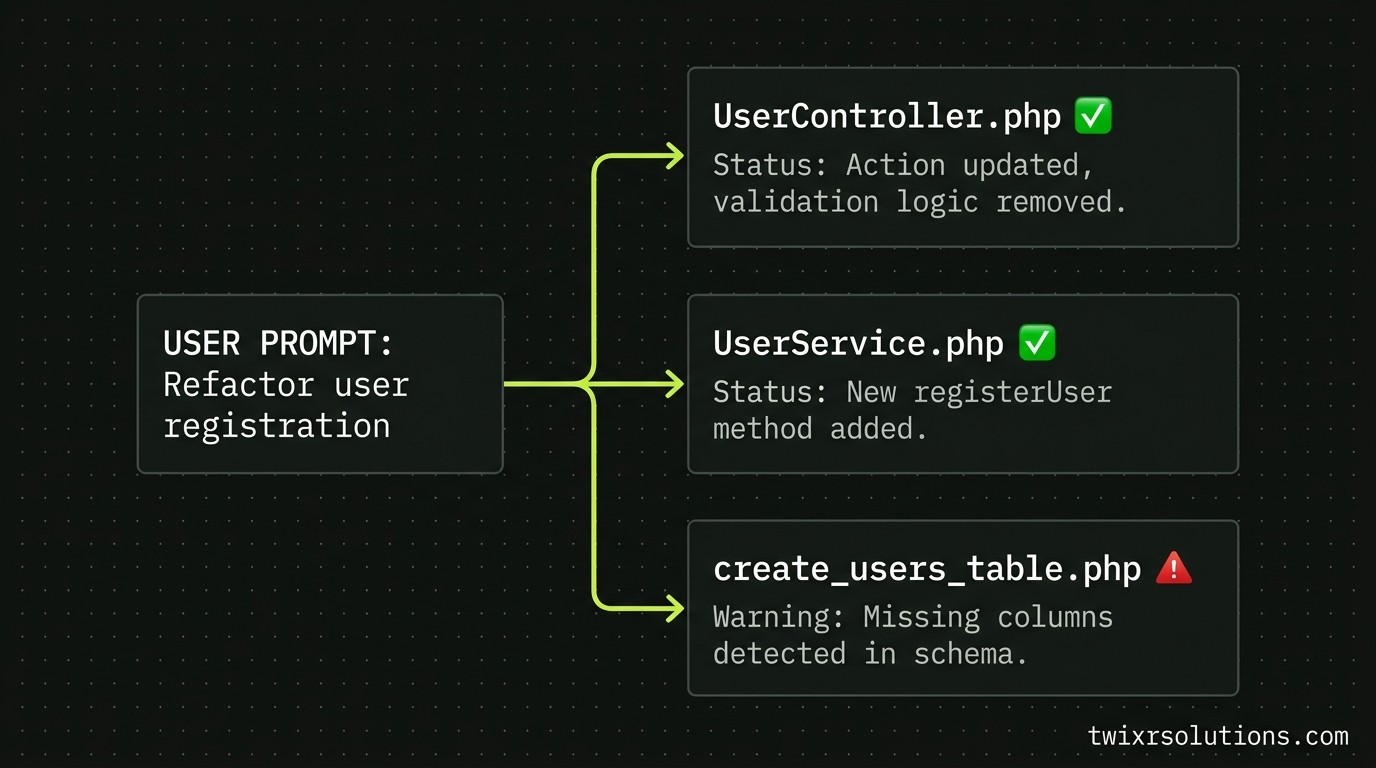
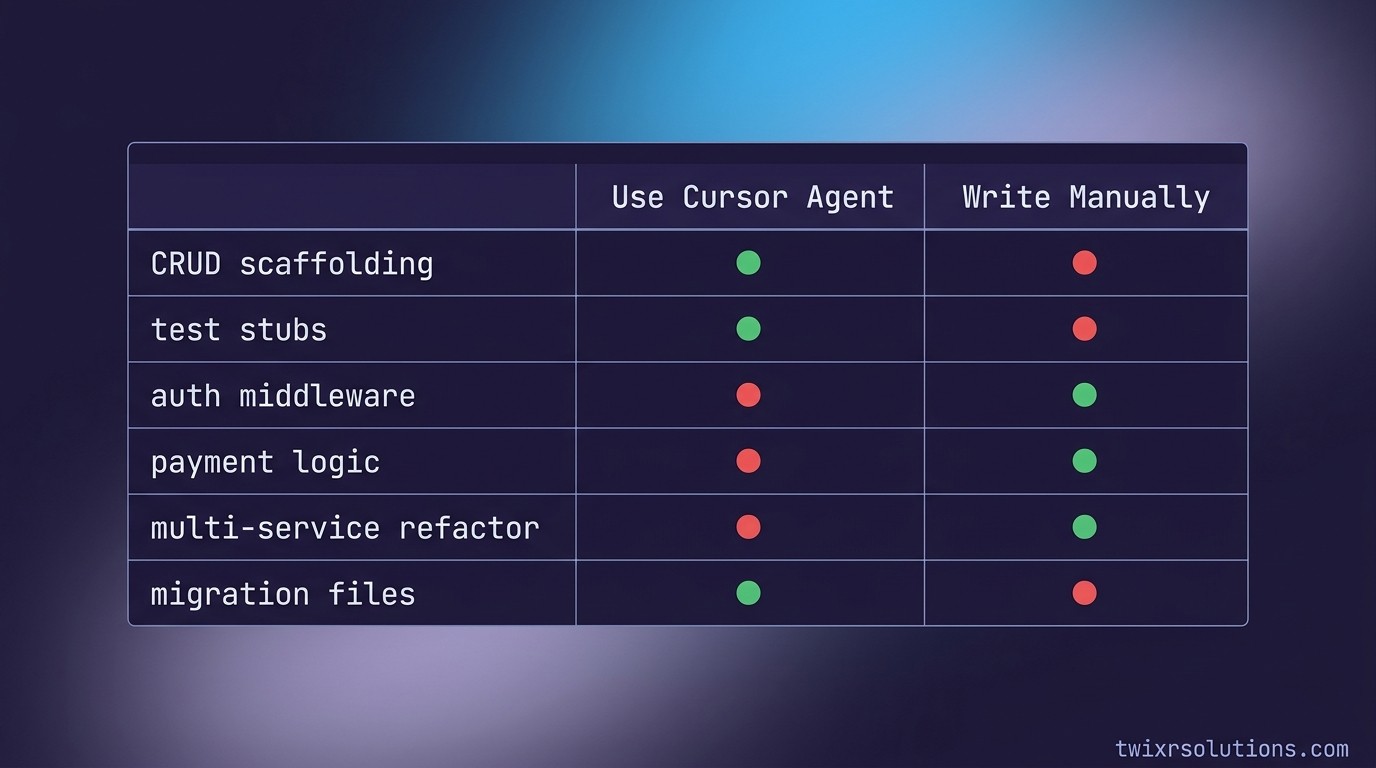
When Cursor introduced its Agent mode in early 2025, it stopped being a fancy autocomplete and started doing multi-file edits with real context awareness. The jump was meaningful for routine scaffolding: CRUD controllers, migration files, test stubs, boilerplate service classes.
For tasks that fit a narrow pattern - "generate a Laravel resource controller with these five methods and inject this repository" - it was accurate enough to keep. The round-trip from thought to working draft dropped from 8 minutes of typing to about 90 seconds of reviewing.
That is a real number. It compounds across a week of feature work.
Cursor also added background agents in its 0.50 release, letting you queue tasks while you stay focused on something else. On paper, useful. In practice, more on that in a moment.
Where It Started Slipping
Two things broke the workflow.
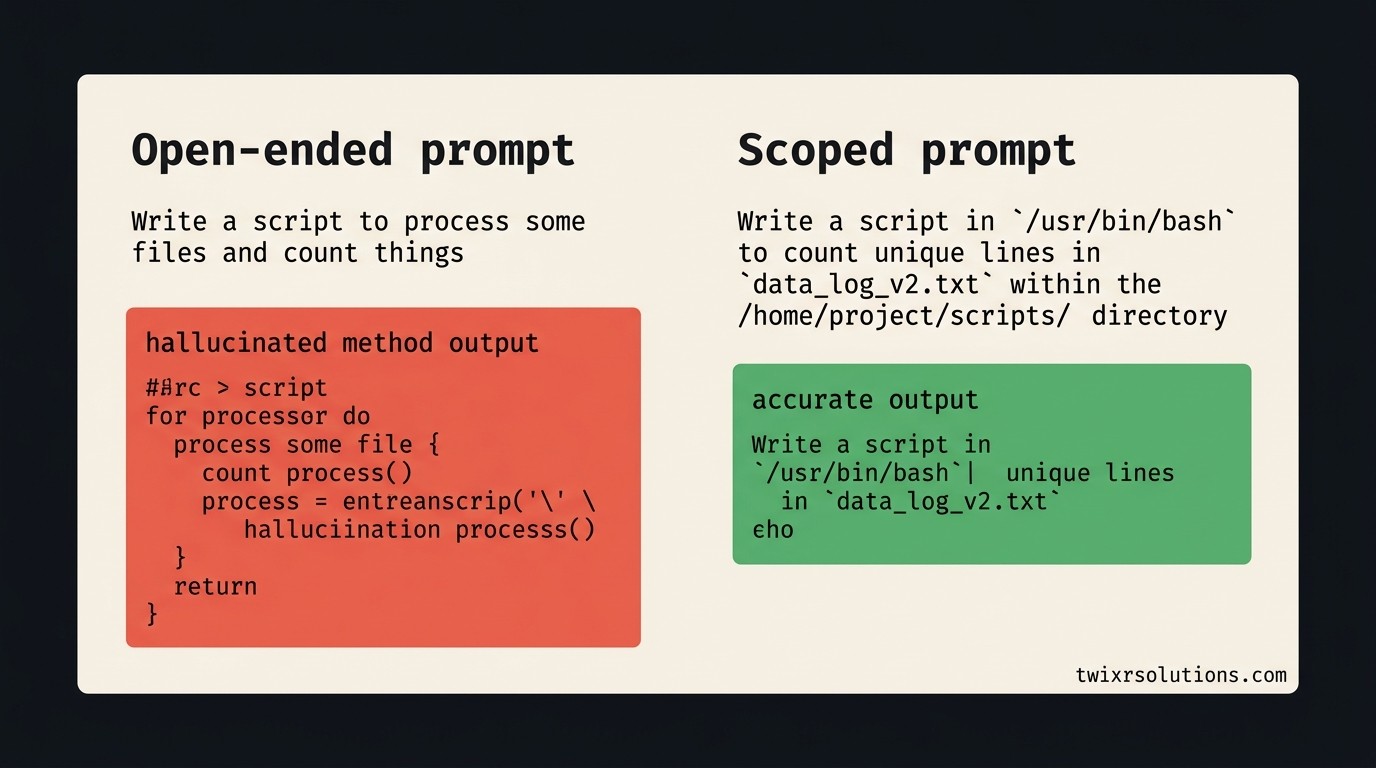
First: context window abuse. Agent mode pulls in a lot of files. When the codebase grew past a certain size, the model started hallucinating method signatures that existed in other files but not the one it was editing. It was confident. It was wrong. Catching those errors cost more time than writing the code manually.
The fix was not to abandon the tool. It was to stop asking it to hold the whole codebase in scope. Scoping prompts tightly - one service, one interface, explicit file paths - brought accuracy back up.
Second: background agents and merge conflicts. Background agents writing to overlapping files while you work on the same branch is a recipe for a messy diff. We lost about 45 minutes on a Friday afternoon untangling a background agent edit that silently overwrote a middleware change.
The recovery was simple: background agents now run only on isolated feature branches, never on a shared working branch. The tooling did not cause the problem. The workflow did.
The Current Setup
Cursor is still in the stack. It earned its spot back, but with explicit constraints:
- Scoped prompts only. One file or one narrow context per Agent task. If the task requires understanding five interconnected services, write it yourself.
- Review before apply. The diff review step is not optional. Skipping it is how the hallucinated method signatures made it into a commit.
- Background agents on isolated branches. Never on a branch where another person or process is also writing.
- No Agent mode for security-adjacent code. Auth middleware, token validation, payment flow logic - these get written by hand. The cost of a subtle bug there is too high to delegate.
This is not a condemnation. It is a calibration. Most of the frustration with AI coding tools comes from treating them as a replacement for judgment rather than a multiplier for routine work.
If you are building AI-assisted products and want to see how structured automation holds up in production workflows, the AI Automation & Chatbots page covers what Twixr actually ships on that front.
For context on how other models changed the build environment this quarter, the Gemini 2.5 Pro Is Out. Here Is What Actually Changes for People Who Ship. post and the GPT-6 Astra Released: What Engineering Teams and Founders Actually Care About post are worth reading back to back.
The Short Take
Cursor is a useful tool. It is not a reliable engineer. The distinction matters.
Use it for high-volume, low-risk scaffolding. Keep it away from logic that carries real consequences. Audit every diff. It stays in the workflow - but it does not drive it.
Frequently asked questions
For narrow, well-scoped tasks it performs well - generating boilerplate, scaffolding CRUD layers, writing test stubs. For multi-service, cross-file edits on a large codebase, accuracy drops noticeably and the review overhead can outweigh the time saved. Scope your prompts tightly and always review the diff before applying.
The main risk is silent overwrites when a background agent edits files on the same branch you or a collaborator are actively working on. The safest mitigation is to run background agents only on isolated feature branches, not on shared or working branches.
Security-critical code - auth middleware, token validation, payment processing logic, data-access permission layers - should be written by hand. The cost of a subtle, confident-looking mistake in those areas is too high to justify the time saving.
Enjoyed this article?
Get notified when I publish new posts on SaaS, Laravel, and remote engineering.