Your AI pipeline is already priced around GPT-5.x rates. GPT-6 Astra just changed that math - and a few other things worth knowing before you ship anything new.
Here is the practical read. No AGI hype. Just what shifts for teams that build.
What Dropped and When
OpenAI released GPT-6 Astra as a limited preview on September 3, 2026, and rolled it to paid users the following day. As of September 4, it is live on:
- ChatGPT Plus, Pro, Business, and Enterprise
- The OpenAI API (model ID:
gpt-6-astra) - Microsoft Azure and AWS Bedrock
One catch: Enterprise access defaults to off at launch. Admins have to enable it manually. Worth checking before your team assumes they have access.
A Pro variant (gpt-6-astra-pro) is available on Pro, Business, and Enterprise plans.
The Three Things That Actually Matter for Builders
1. Agentic Coding and Codex Context
OpenAI says Astra is their best model for software engineering to date. The part worth tracking: Codex now carries context across sessions using searchable notes instead of compaction. That is a meaningful workflow change. Compaction has always been a rough edge - you lose thread continuity right when a long debugging session gets useful. Persistent, searchable context fixes that, at least in principle.
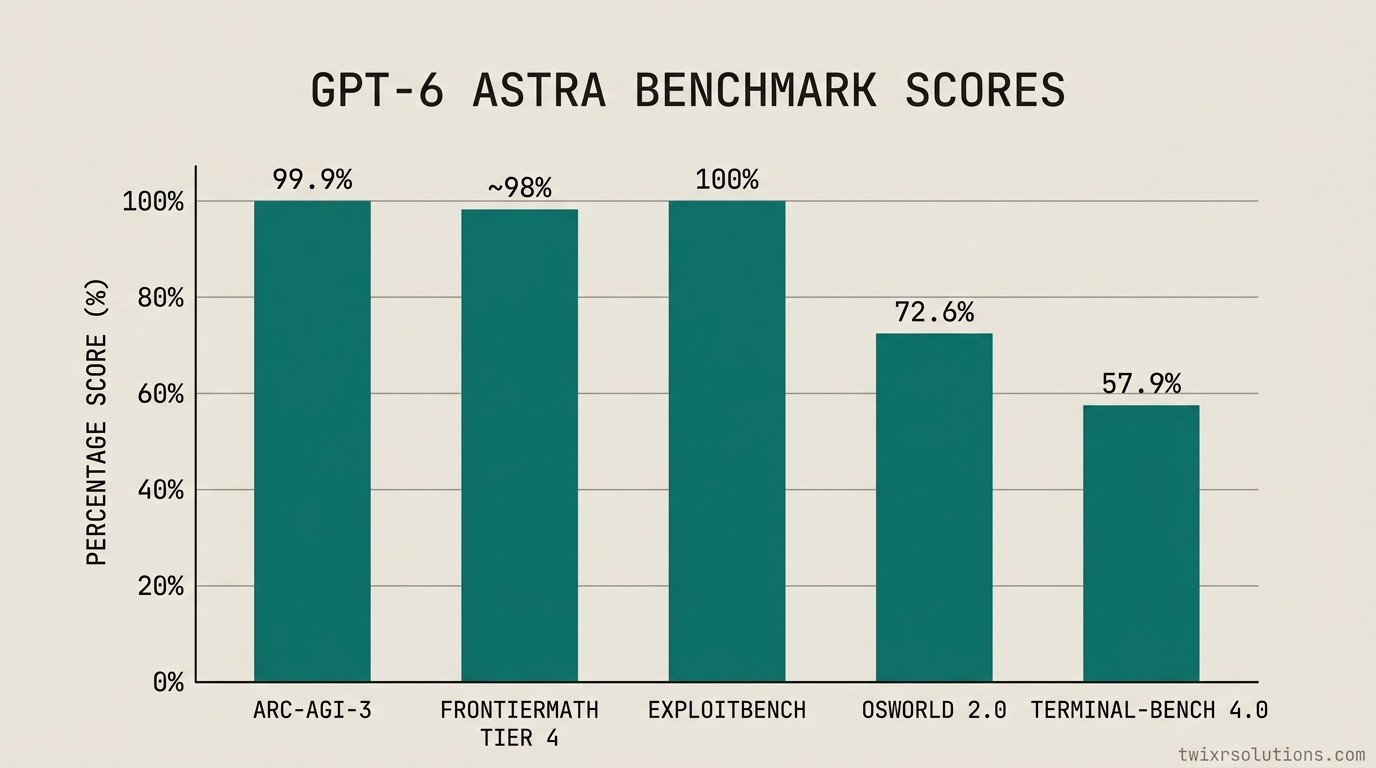
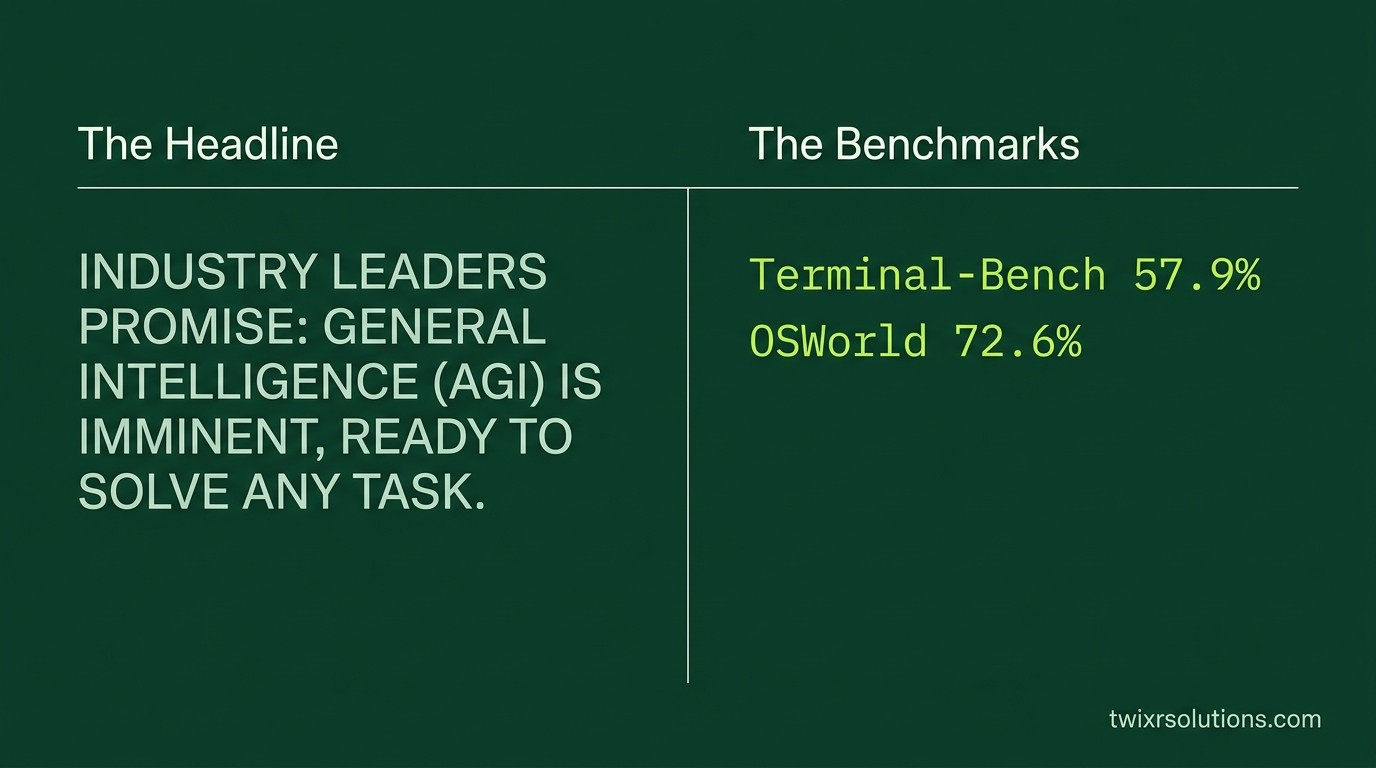
Whether it holds up under real multi-day tasks is something teams will find out quickly. The benchmark numbers OpenAI cites are strong: Terminal-Bench 4.0 at 57.9%, OSWorld 2.0 at 72.6%. Those are the numbers that matter for anyone building agentic coding pipelines, not the AGI framing.
2. Computer Use and Browser Automation
Astra scores 72.6% on OSWorld 2.0 and completes tasks roughly 1.9x faster than GPT-5.6 Sol, according to OpenAI's own numbers. That gap matters if you are building browser automation, form-filling agents, or RPA-style workflows.
If you are already running AI Automation & Chatbots for clients, Astra's computer-use capability is worth prototyping now. The OSWorld number suggests it can handle messy, real-world UI flows better than its predecessors - though 72.6% still means roughly 1 in 4 tasks fails without a fallback.
Design your retry logic accordingly. A model this capable still needs guardrails around it.
3. The Cost Math
This is where you need to pause before you migrate anything.
| Mode | Input | Output |
|---|---|---|
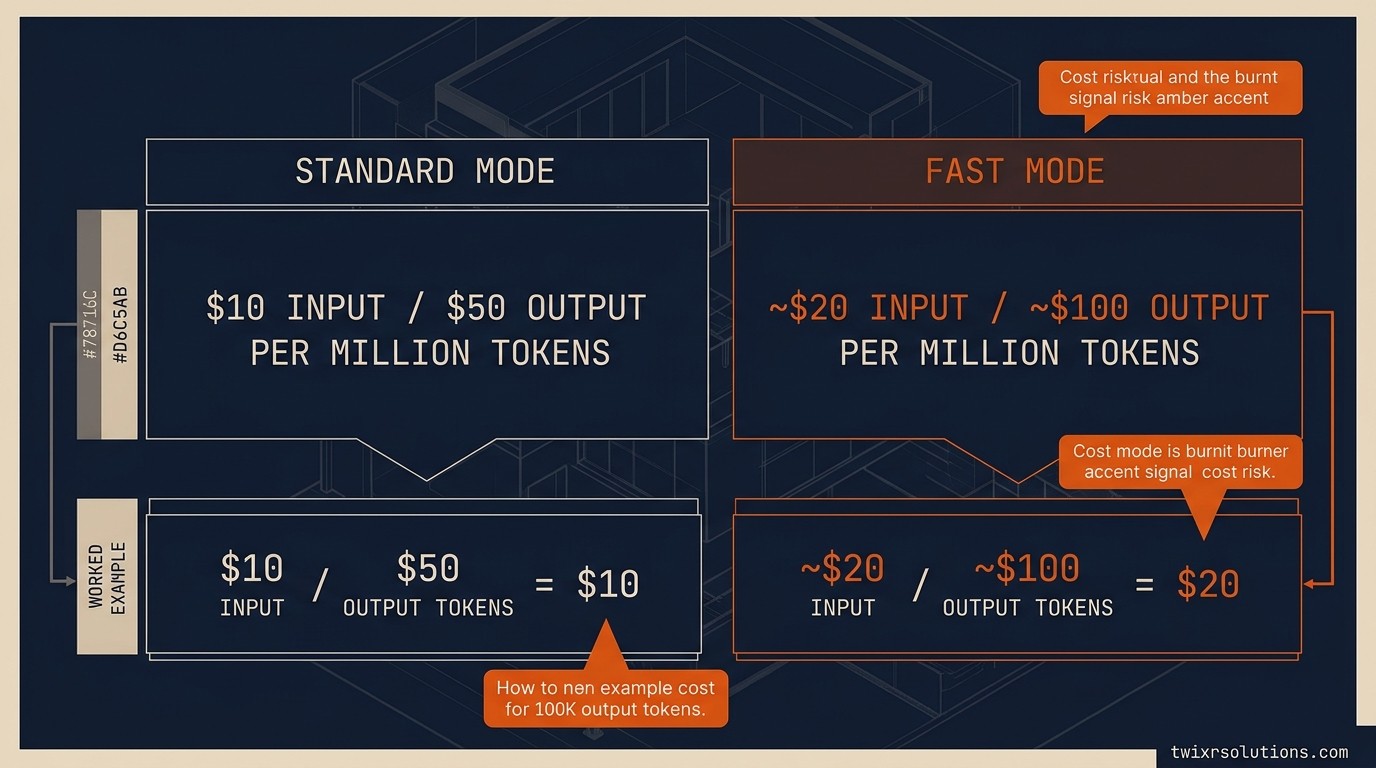
| Standard | $10 / 1M tokens | $50 / 1M tokens |
| Fast (approx. 2x speed) | ~$20 / 1M tokens | ~$100 / 1M tokens |
Cache read and write rates apply separately on top of this.
Output is expensive. A heavy agentic loop that generates 100K output tokens costs $5 per run at standard rates. At Fast mode, that doubles. Run a few hundred of those per day and the bill gets serious fast.
Before migrating a production pipeline, profile your actual output token volume. If your use case is short, structured outputs, the cost is manageable. If it is long-form generation or multi-turn agents with verbose reasoning, benchmark the cost delta first.
For comparison, I did a similar cost-and-capability breakdown when Gemini 2.5 Pro Is Out. Here Is What Actually Changes for People Who Ship. - the pattern is the same: new frontier model, meaningful capability jump, pricing that demands profiling before you move production workloads.
The Cybersecurity Angle - Factual, Not a How-To
OpenAI's benchmarks include ExploitBench at 100% and ARC-AGI-3 at 99.9%. Those numbers explain why OpenAI is restricting the most advanced cybersecurity capabilities at launch. Advanced security work starts with a limited tester group and then expands through a program called Daybreak Blue.
The model also uses a new reasoning technique called recurrent depth (sometimes called looped transformers). It improves efficiency, but it also obscures the model's chain of thought. That is a monitorability concern OpenAI's own chief scientist flagged publicly. If you are building anything where auditability matters - compliance tooling, legal workflows, anything regulated - you need to know that Astra's reasoning is harder to inspect than its predecessors.
Flag it for your team. It is not a reason to avoid the model, but it is a reason to be deliberate about where you deploy it.
What to Do This Week
If you ship on LLMs, here is a short checklist:
- Audit your Enterprise org settings - Astra is off by default for Enterprise; enable it consciously.
- Profile output token volume before migrating any production pipeline.
- Test Codex session persistence on a real multi-day debugging task, not a toy prompt.
- Prototype one computer-use or browser-automation flow and measure actual task success rate against the 72.6% OSWorld number in your context.
- Skip Fast mode for anything batch or non-latency-sensitive. Standard is already fast.
If you want to go deeper on wiring LLM agents into real workflows, the Upwork MCP Server: The AI Agent Now Built Into Your Freelance Account post covers how agentic integrations are landing in practical tooling right now.
The AGI Claim - Worth Reading Carefully
OpenAI's president Greg Brockman said Astra "could eventually be seen as the arrival of artificial general intelligence." OpenAI's own definition of AGI is "an automated system that can perform all economically valuable work as well as or better than humans."
That is a marketing frame, not a specification. A 99.9% ARC-AGI-3 score and a 57.9% Terminal-Bench score do not resolve to the same system. Treat the AGI framing as a signal about OpenAI's positioning, not a product claim you should ship against.
Build for what the benchmarks actually show. The capabilities are real and worth using. The headline is noise.
The model is genuinely capable. The cost math is genuinely different. Both deserve attention before you change anything in production.
Frequently asked questions
GPT-6 Astra became publicly available on September 4, 2026. The model ID on the OpenAI API is gpt-6-astra. It is also available on Microsoft Azure and AWS Bedrock. Enterprise access is off by default and must be enabled by an admin.
Standard pricing is $10 per million input tokens and $50 per million output tokens. Fast mode runs at approximately 2x the standard price for roughly 2x the speed. Separate cache read and write rates apply. Output costs dominate for agentic workloads, so profile your output volume before migrating production pipelines.
Recurrent depth, also called looped transformers, is a new reasoning technique OpenAI uses in Astra. It improves efficiency but obscures the model's chain of thought, making its reasoning harder to audit. If you are building anything where explainability or compliance matters, factor in that Astra's internal reasoning is less transparent than prior models. OpenAI's chief scientist flagged this as a genuine monitorability concern.
Enjoyed this article?
Get notified when I publish new posts on SaaS, Laravel, and remote engineering.