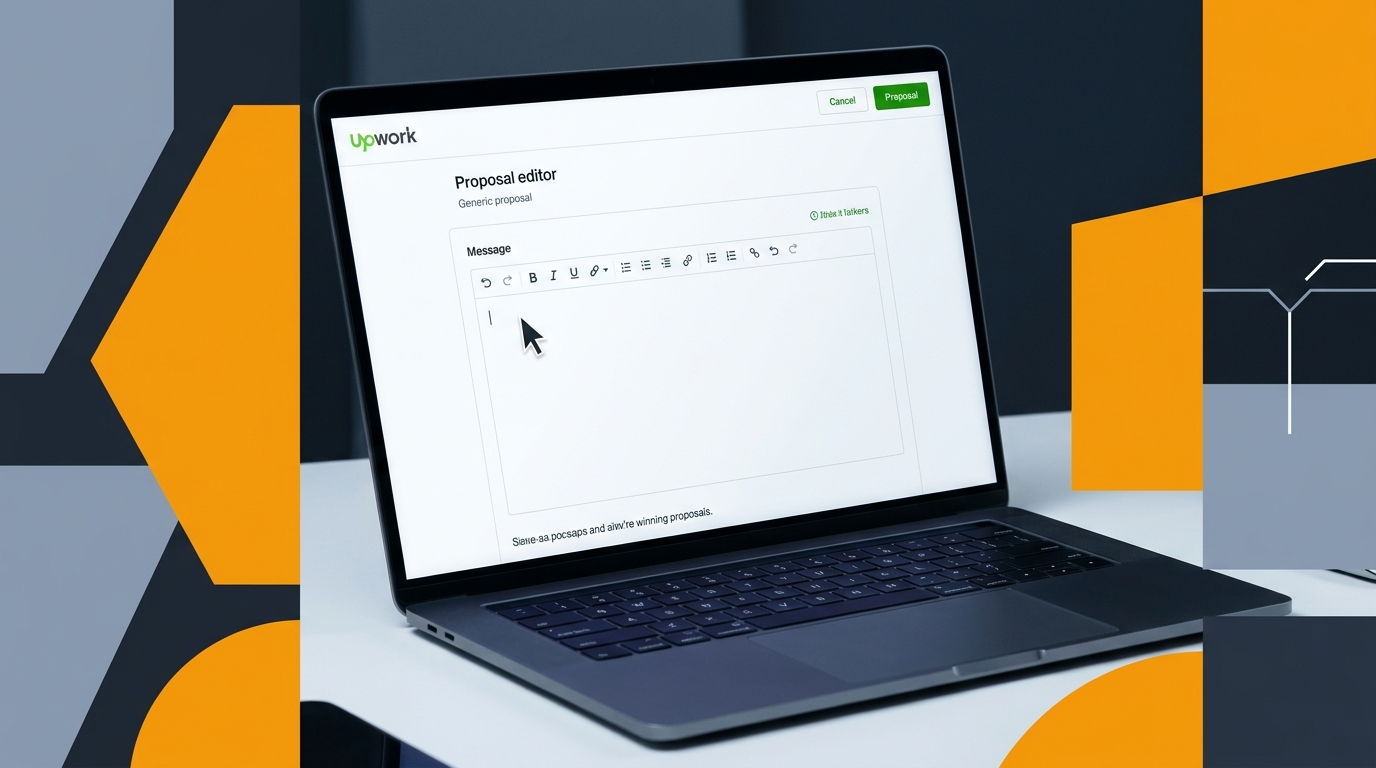
Most Upwork proposals get skipped before the second sentence. Not because the dev was underqualified. Because the opening line was about the dev, not the client.
That is the entire problem, and fixing it costs you nothing except a habit.
What Clients Actually See First
A client posts a job. Within a few hours, they have 30 to 60 proposals in a queue. On mobile, they see roughly the first 200 to 300 characters of your message before they decide whether to tap in.
That preview window is your entire first impression.
Here is what fills most of those previews:
-
"Hi, I am a senior full-stack developer with 8 years of experience..."
-
"I have read your job description carefully and I am interested..."
-
"Dear client, I am confident I can deliver your project..."
None of these say anything the client does not already know - every proposal came from someone who read the job post. Every proposal claims confidence. Experience statements without proof are noise.
The client skips. Every time.
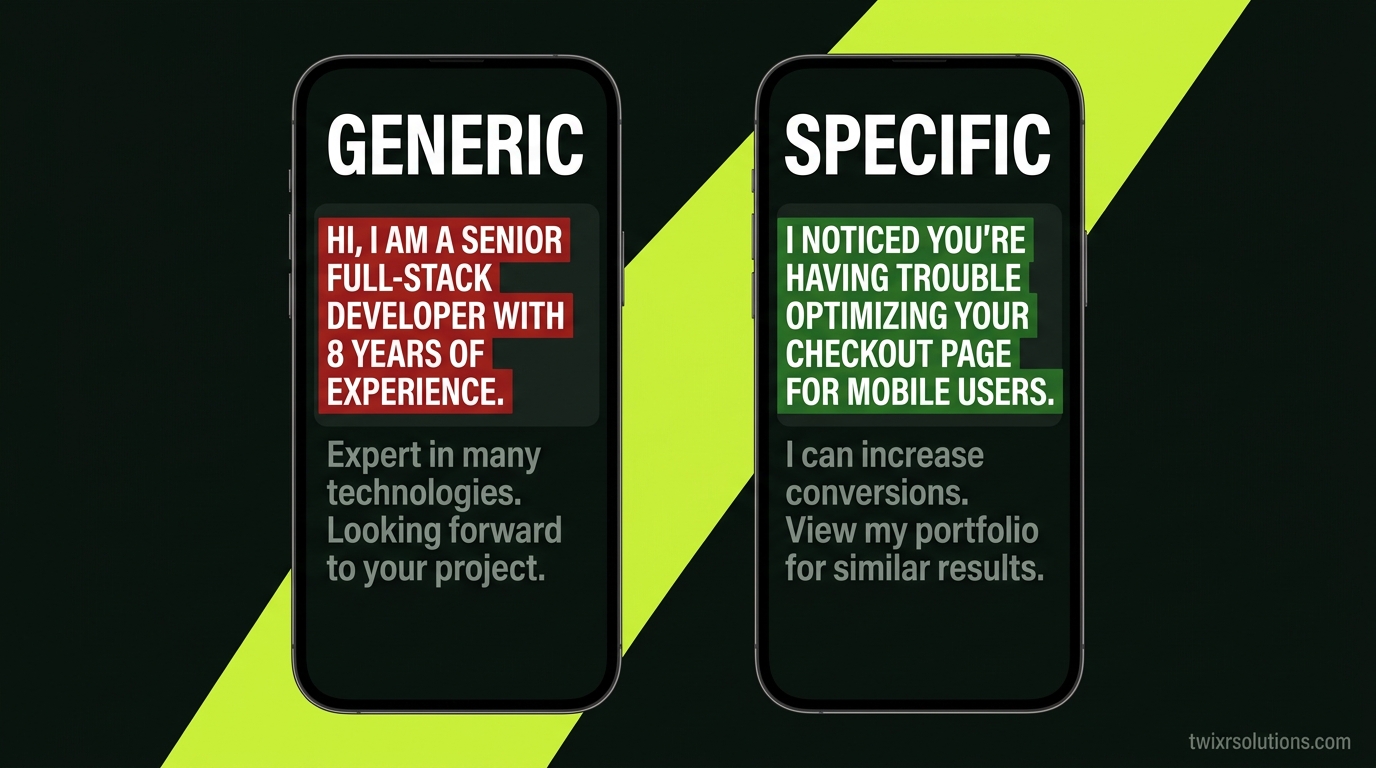
The Real Job of the Opening Line
Your opening line has one job: make the client feel understood.
Not impressed. Not informed. Understood.
When someone reads a line and thinks "this person gets exactly what I am dealing with," they slow down. They read the rest. That is the only goal of line one.
Here is a practical way to think about it. The client is not posting a job description. They are posting a problem they are anxious about. Your opening line should reflect that anxiety back at them - accurately and specifically.
Generic problem: "I need a Laravel developer." Real anxiety behind it: "My current backend is a mess of spaghetti code and I am terrified the next feature request will break everything."
Speak to the anxiety, not the job title.
The Formula (It Is Not a Template)
There is a structure that works, but resist treating it as a fill-in-the-blank template. Clients have seen every template. The goal is to sound like a person who read their post, not a bot who parsed it.
The structure:
[Specific observation about their situation] + [what that means in practice for them]
That is it.
The observation has to come from their actual post - a detail, a constraint, a phrase they used, a tech stack they mentioned, a timeline they flagged. The more specific the observation, the more trust it builds instantly.
A few examples to show the contrast:
Weak: "I have experience building SaaS platforms and I think I can help you."
Stronger: "You mentioned your current checkout flow has a 30-second delay on plan upgrades - that almost always points to a synchronous webhook handler blocking the response. I have fixed this pattern twice in the last year."
Weak: "I am a Laravel expert with Stripe integration experience."
Stronger: "Your job post says the payment system works fine until a subscription changes mid-cycle. Proration logic in Stripe is genuinely tricky and most tutorials skip the edge cases. I can walk you through exactly what I would check first."
Notice what the stronger versions do not do: they do not list years of experience, they do not claim passion for the project, and they do not ask for a call in the first line.
They demonstrate competence by engaging with the actual problem.
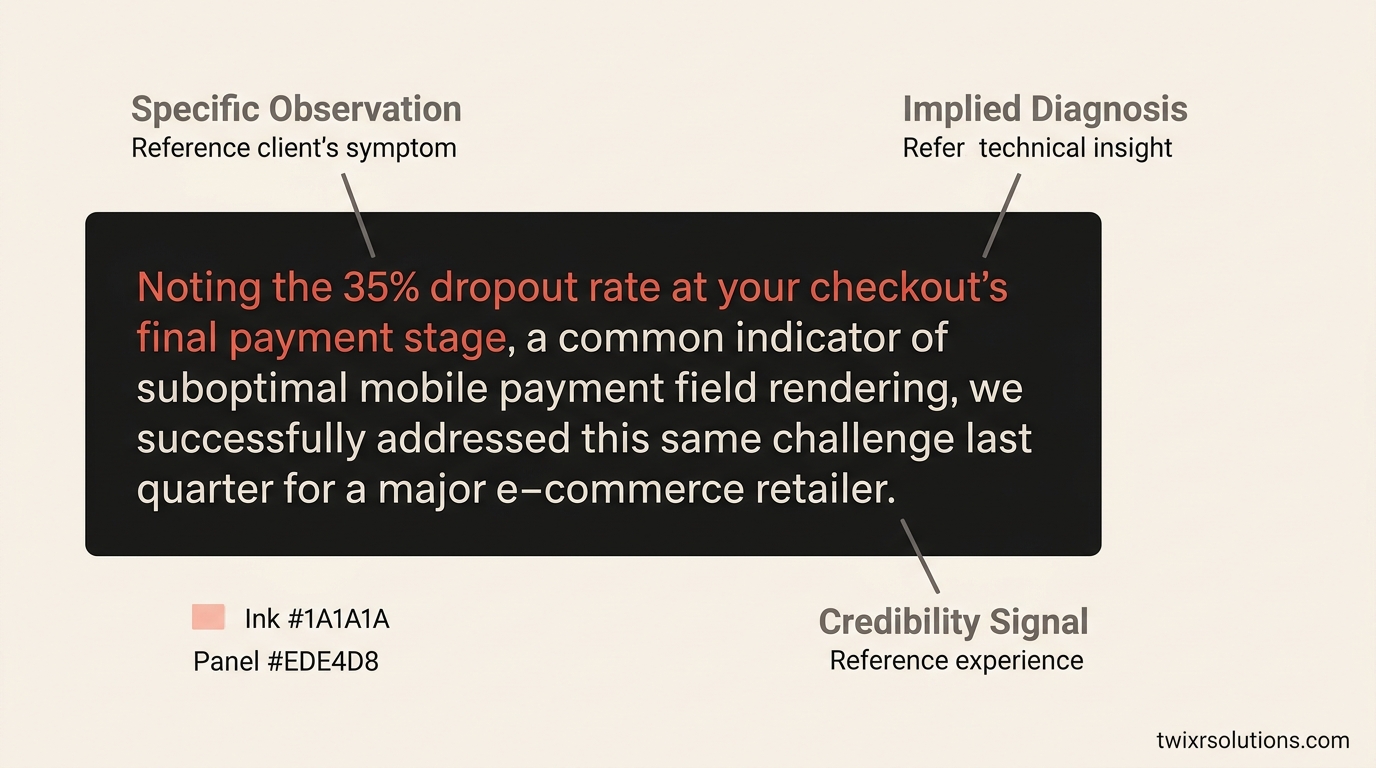
What to Mine From the Job Post
Before writing a single word, spend three to five minutes on this:
-
What specific symptom did they describe? Not the category ("I need an API") but the pain ("our mobile app times out after 10 seconds on the search endpoint").
-
What tech or tool did they name? If they mentioned a specific version, a third-party service, or a legacy system, that is a gift. Reference it.
-
What deadline or constraint did they flag? Timelines and blockers reveal what they are actually stressed about.
-
What word or phrase did they repeat? Repetition in a job post means emphasis. Use their language back at them.
If the job post is vague and gives you nothing specific to work with, that itself is information. You can open by naming the kind of problem that typically hides behind a vague brief - but only if you have actually seen it before. Do not guess at a specific diagnosis you cannot back up.
The Lines That Kill Proposals Immediately
Some openings are so common they have become invisible at best, and irritating at worst. Avoid all of these:
-
Any variation of "I am interested in your project" - everyone who submitted a proposal is interested
-
"I have carefully read your job description" - this is table stakes, not a selling point
-
Complimenting the project ("What a fascinating challenge!") - reads as performative
-
A question that could have been answered by reading the post - signals you did not read it
-
Copying and pasting their job title back at them as the first line
If you catch yourself writing any of these, delete the line and ask: what is the one thing in this post that tells me something real about their situation? Start there.
A Note on Length
The opening line sets the tone for the whole proposal. Clients who keep reading past it are already leaning toward you. Clients who bounce at it were never going to hire you based on the rest, no matter how strong it was.
Keep the full proposal under 200 to 300 words for most projects. The opening line should take up roughly the first two to three sentences - enough to land the specific observation and the practical implication, no more.
After that: one concise paragraph on your relevant experience (with a concrete example if you have one), a brief note on how you would approach their specific problem, and a single low-friction question that moves the conversation forward.
Not: "When can we jump on a call?"
Something like: "Does the timeout only happen under load, or is it consistent on every request?" - a question that shows you are already thinking about the problem.
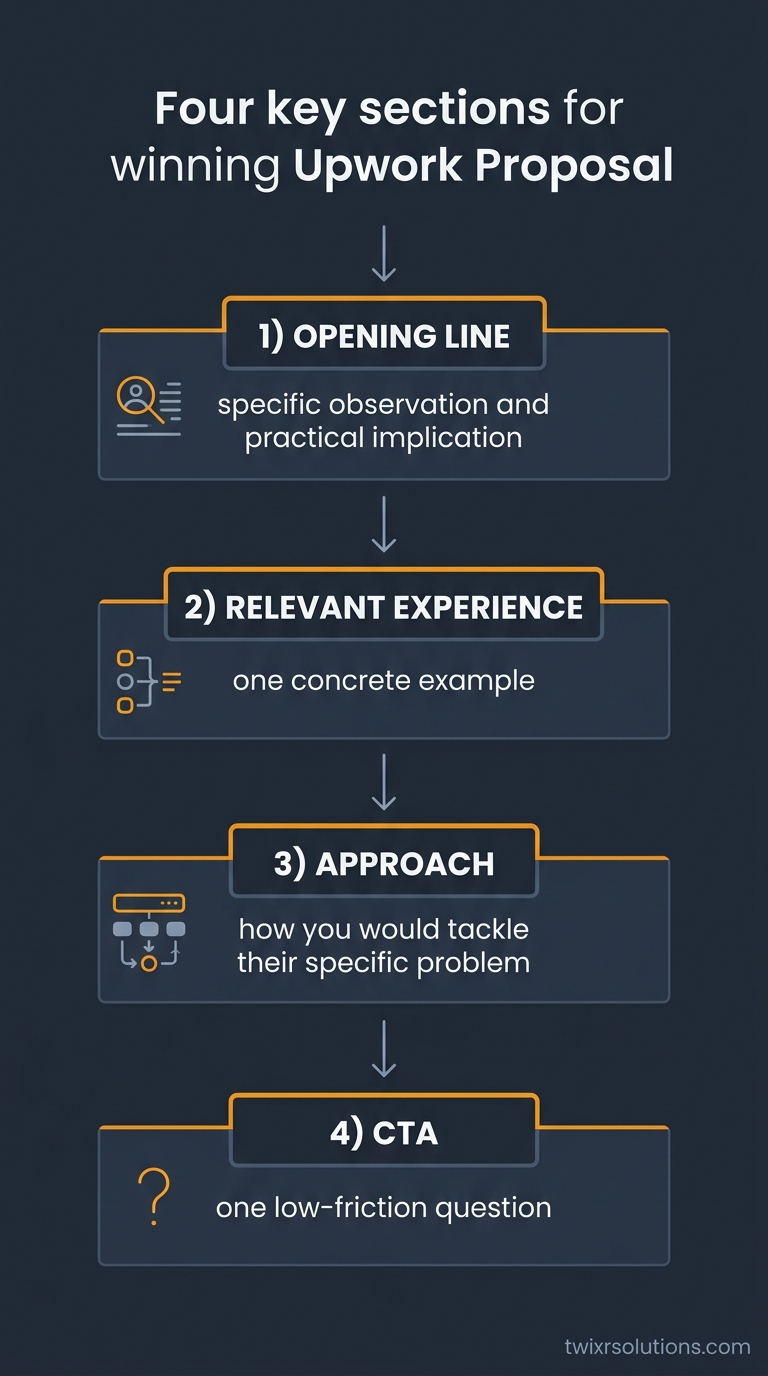
The Honest Part
Writing a strong opening line takes longer than copying a template. You will write fewer proposals. That is the point.
Ten targeted proposals will out-perform fifty generic ones. The clients worth working with can tell the difference between someone who read their post and someone who blasted a form letter. The clients who cannot tell the difference are usually not the ones you want.
The opening line is not a trick. It is a signal that you pay attention - and that is exactly what a client is hiring for.
Alternate hooks:
-
"Your Upwork proposal opened with 'Hi, I am a senior developer.' The client stopped reading there."
-
"Thirty proposals in the queue. The client opens yours. You have about 200 characters to not sound like everyone else."
Frequently asked questions
Two to three sentences is enough. The goal is to land one specific observation about the client's situation and what it means in practice. Any longer and you risk burying the point before the client decides to keep reading.
No. Experience claims without proof are noise at the top of a proposal. Save credentials for the second paragraph, and anchor them to a concrete example rather than a number.
A vague post is itself a signal. You can open by naming the kind of problem that typically sits behind a vague brief - but only if you have genuinely seen that pattern before. If the post gives you nothing at all to work with, it is worth questioning whether to bid at all.
Only if the question demonstrates that you have already thought about their problem. A question that could have been answered by reading the post signals that you did not read it. Save the question for the end of the proposal, after you have shown you understand the work.
Quality over volume is the practical answer. Ten proposals with strong, specific openings will typically produce better results than fifty generic ones. The right number depends on your niche and availability, but the return on each proposal goes up sharply when the opening line is tailored.
Enjoyed this article?
Get notified when I publish new posts on SaaS, Laravel, and remote engineering.