Key takeaways
- A retainer is earned by making the cost of losing you obvious, not by asking for more work.
- The right moment to surface ongoing value is before the final delivery, not after.
- Scope creep during the gig is your best signal that a retainer conversation is warranted.
- Price the retainer by risk coverage, not by hours.
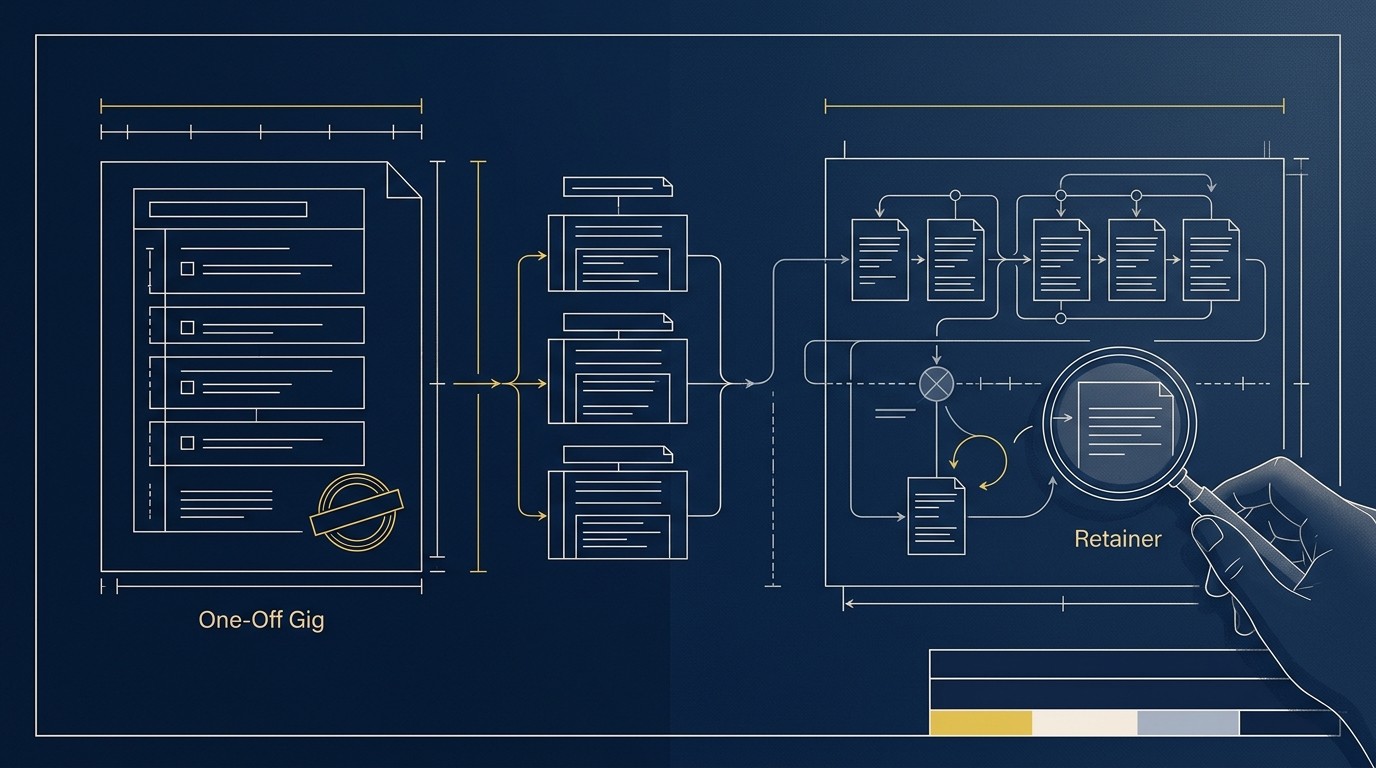
The client who hired you for a fixed scope is already the warmest lead you have.
They know your work. They trusted you once. The only question is whether you give them a reason to keep paying - or hand the relationship back to Upwork's algorithm.
Most engineers hand it back. Not from laziness. From assuming the client will ask. They rarely do.
The retainer is not something you pitch. It is something you make inevitable by how you close the gig.
Here is the decision table. Four objections a sharp client will raise. Four honest answers.
Objection One: Scope Completeness
The objection: "We hired you to build the thing. The thing is built. Why do we need you now?"
The conclusion first: your delivery created new surface area they do not yet understand.
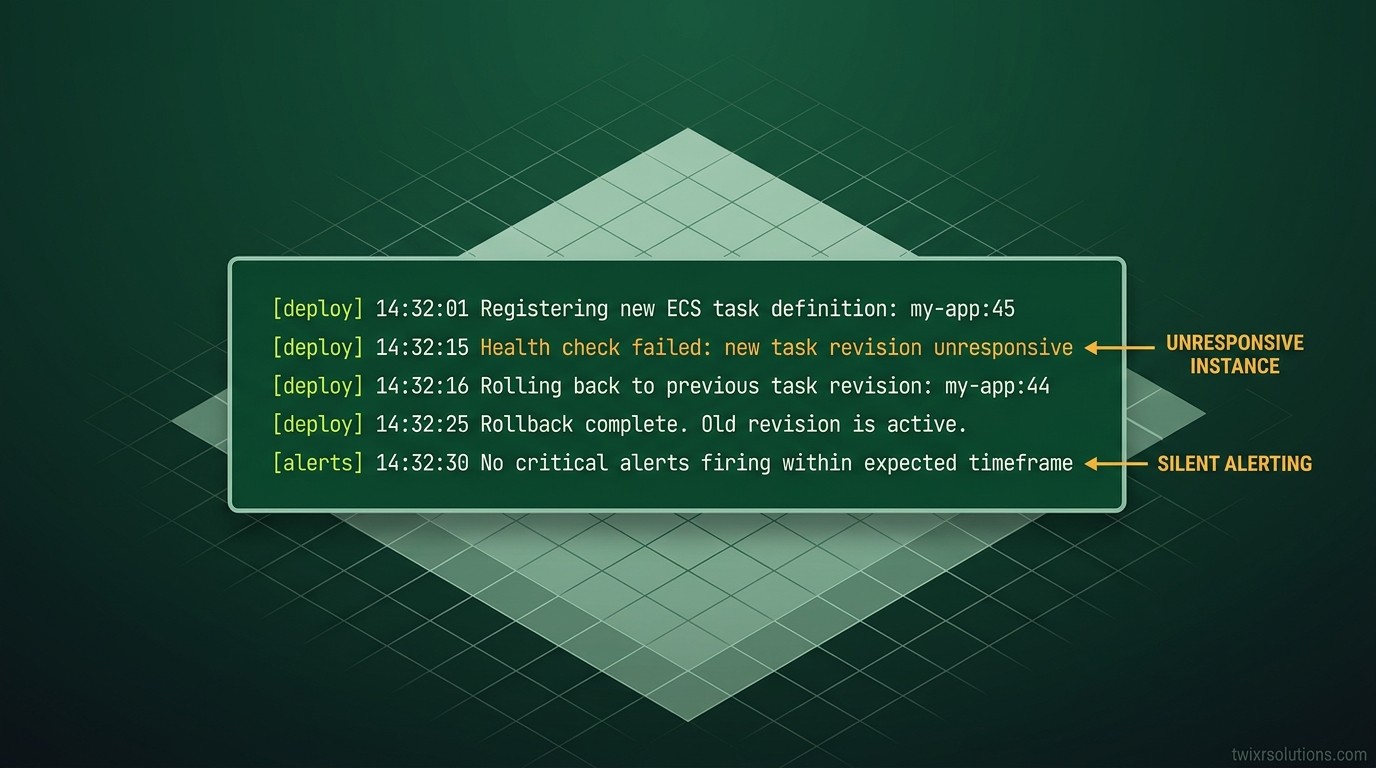
Every production deployment opens failure modes the spec never mentioned. Who owns the on-call rotation for the new service? Who knows which environment variable controls the payment webhook timeout? Who rolls back if the next deploy breaks the migration?
This is not fear-mongering. It is a genuine gap. The client's internal team did not build it, so they cannot own it on day one.
# What they think happens after handoff
git push origin main
# -> CI passes, done

# What actually happens
git push origin main
# -> CI passes
# -> ECS task fails health check on new revision
# -> ALB keeps routing to old revision
# -> No alert fires because CloudWatch alarm threshold is 2 minutes
# -> Client discovers 45 minutes later via a user complaint
The question to ask the client at delivery: "Who gets paged if this goes down at 2am next week?" If they pause, the retainer conversation is already open.
Objection Two: Cost Justification
The objection: "A retainer is a fixed monthly cost. How do I justify that without a concrete deliverable?"
The conclusion: you price the retainer against the cost of an incident, not against hours of work.
This is where most engineers lose the conversation. They propose a number of hours per month. The client hears "we are paying for availability." That is easy to cut.
Price it differently. Ask what a 2-hour outage costs them in support tickets, lost conversions, or SLA penalties. Whatever that number is, your retainer is cheaper. You are not selling hours. You are selling a shorter mean time to recovery.
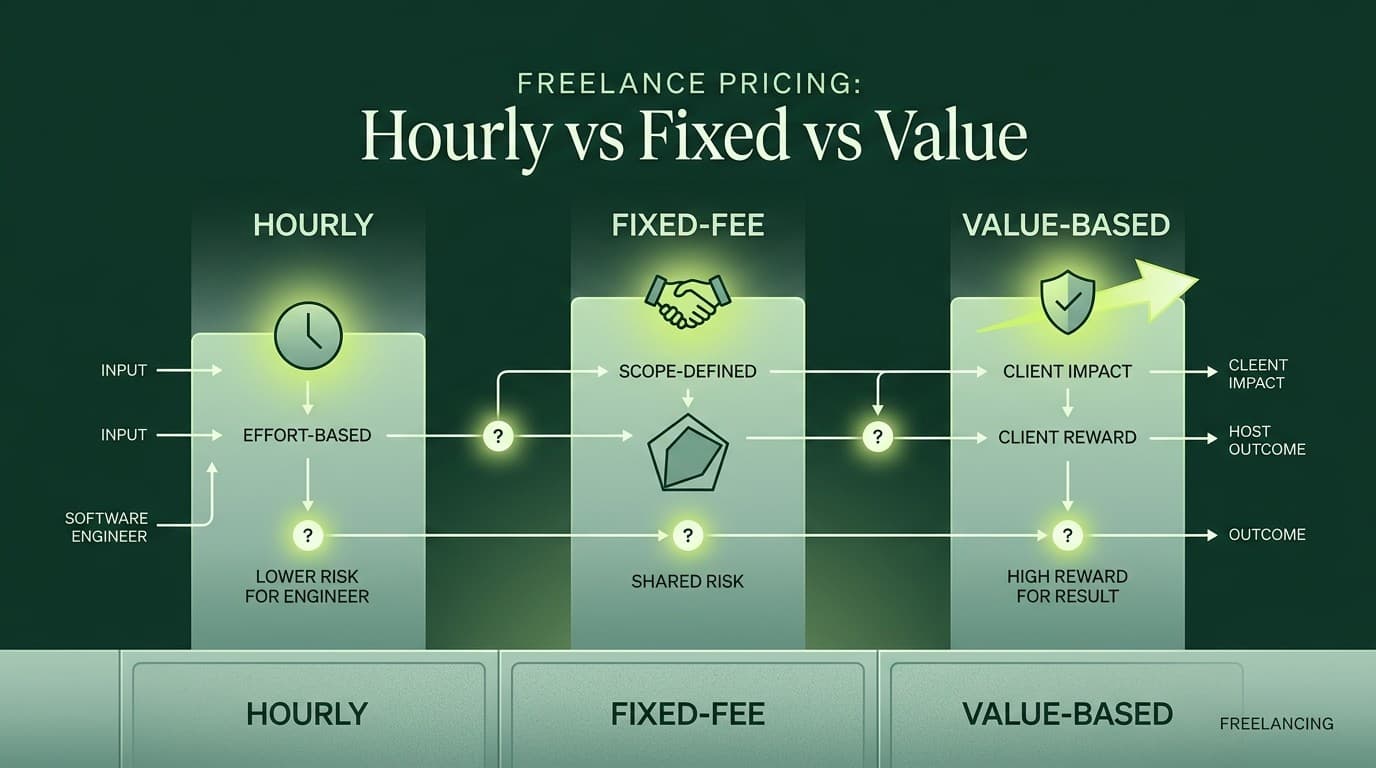
See Freelance Pricing: Hourly vs Fixed vs Value - A Decision... for the fuller argument on why value-based framing holds up better under budget scrutiny than an hourly rate ever will.
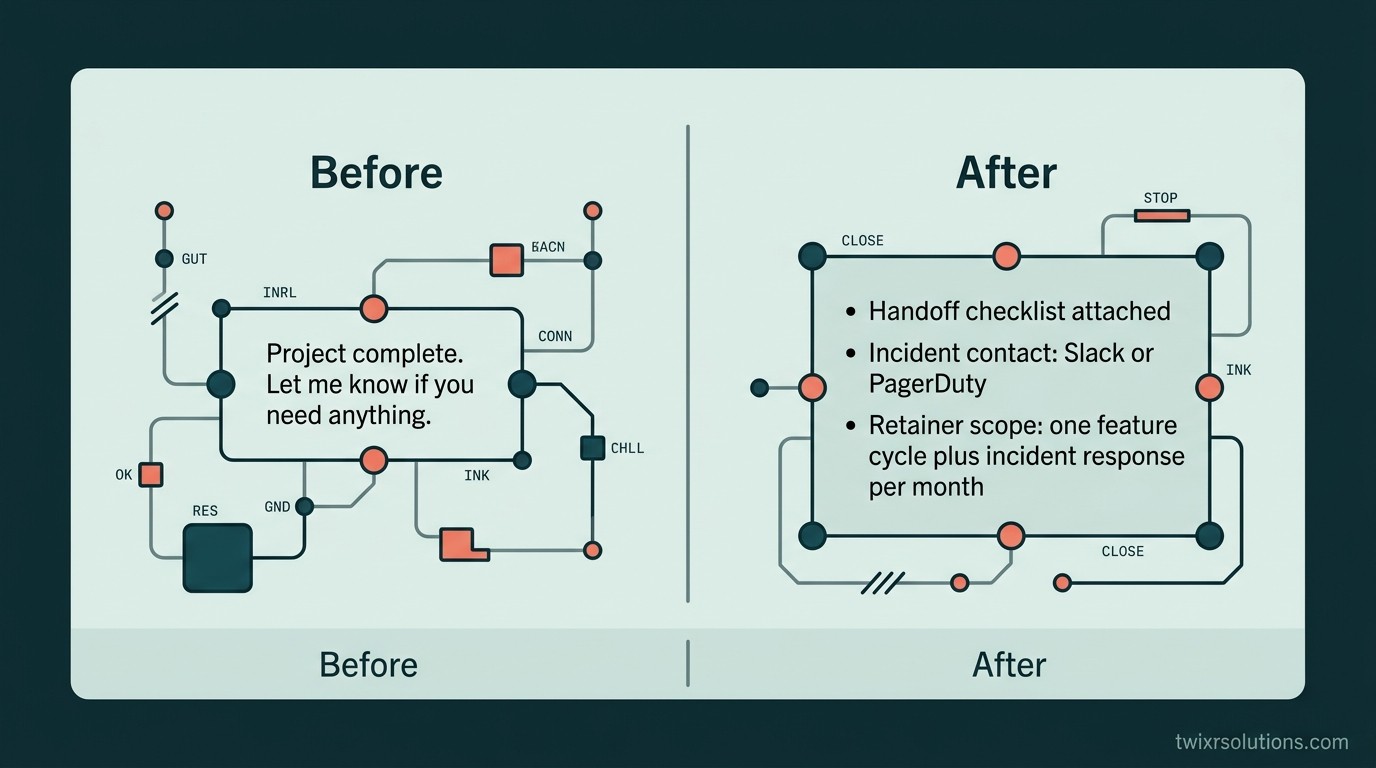
// Retainer scope framed as risk coverage, not time
const retainerValue = {
  includedWork: [
    "One planned feature cycle per month",
    "Incident response within 4 business hours",
    "Dependency and security patch review"
  ],
  notIncluded: [
    "Net-new product discovery",
    "Data migrations outside agreed schema"
  ],
  escalationPath: "Slack -> PagerDuty -> emergency call"
};
A written scope like this makes the retainer feel like a product, not an open tab. That matters when the client defends the line item in a budget review.
Objection Three: Timing
The objection: "We will revisit this in a few months once we see how things run."
The conclusion: waiting costs more than they expect, and you can show the math.
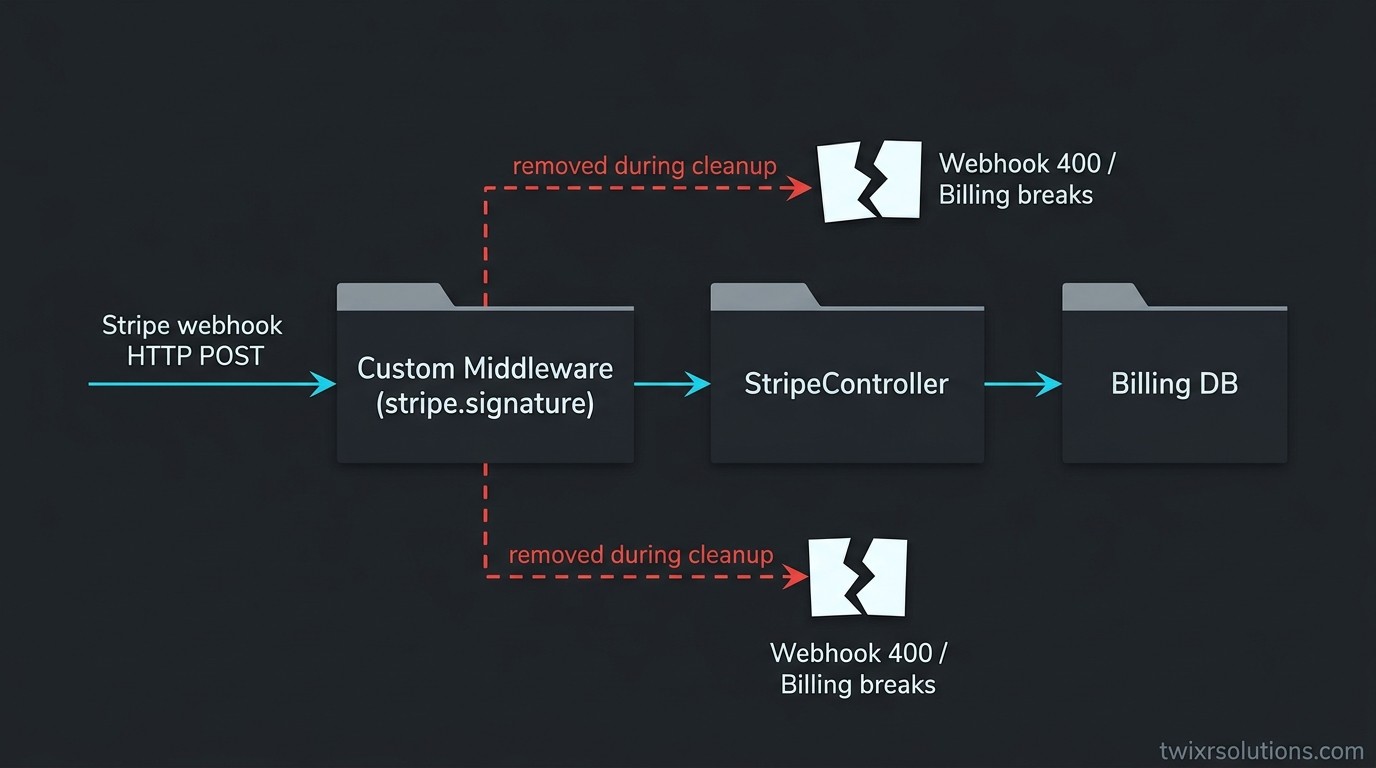
"A few months" usually means context loss. The mental model you have right now - which env var controls which flag, which queue processes which job, why that one cron is commented out - fades. When they call you back, you are rebuilding that context from scratch.
// Context that lives in your head at handoff
// Three months later, it lives nowhere
Route::post('/webhook/stripe', [StripeController::class, 'handle'])
    ->middleware('stripe.signature') // custom middleware, not in docs
    ->withoutMiddleware(['auth', 'throttle:api']); // intentional, not a bug
The comment in that snippet is the retainer argument. Without continuity, whoever touches this next will remove those middleware exceptions as an obvious "cleanup." That breaks Stripe webhooks. That breaks billing. That is a bad week.
Offer a lightweight option for the "wait and see" client: a monthly check-in retainer with a small fixed scope. Low commitment. Low cost. High signal for when things break.
Objection Four: Internal Capability
The objection: "Our team can handle it from here."
The conclusion: describe what that handoff actually requires. Do not argue against it.
This section will not recommend a counter-move. The client may be right. If they have a strong internal engineer who was involved throughout the build, the handoff can work.
What is fair to describe, without pushing: a clean handoff takes time. Runbooks, architecture decisions with their context, a recorded walkthrough of the system, and at least one pairing session. If the client's team can absorb that and own the outcomes, that is a good result.
If they cannot allocate that time, the knowledge transfer is incomplete. That is not your fault, but it will feel like it is when something breaks.
The honest thing to say: "Here is what a thorough handoff looks like. If your team has the bandwidth for this, let us do it right. If not, a retainer keeps the context alive until they do."
See Red Flags in a Job Post: Before You Bid, Read This - the same signals that flag a bad client upfront also flag a client who will struggle with ownership after handoff.
The Objection We Cannot Answer
There is one scenario where the retainer argument fails: the client simply does not have budget, and that is the whole story.
No framing fixes a real budget constraint. Pushing harder damages the relationship and the review. The right move is a clean handoff, a clear runbook, and a door left open. Clients who genuinely liked working with you will be back when the budget exists.
What we can control is not leaving that door open by accident. Leave it open on purpose. A short "here is how to reach us when you are ready to scale" note at project close costs nothing and converts better than a pitch ever will.
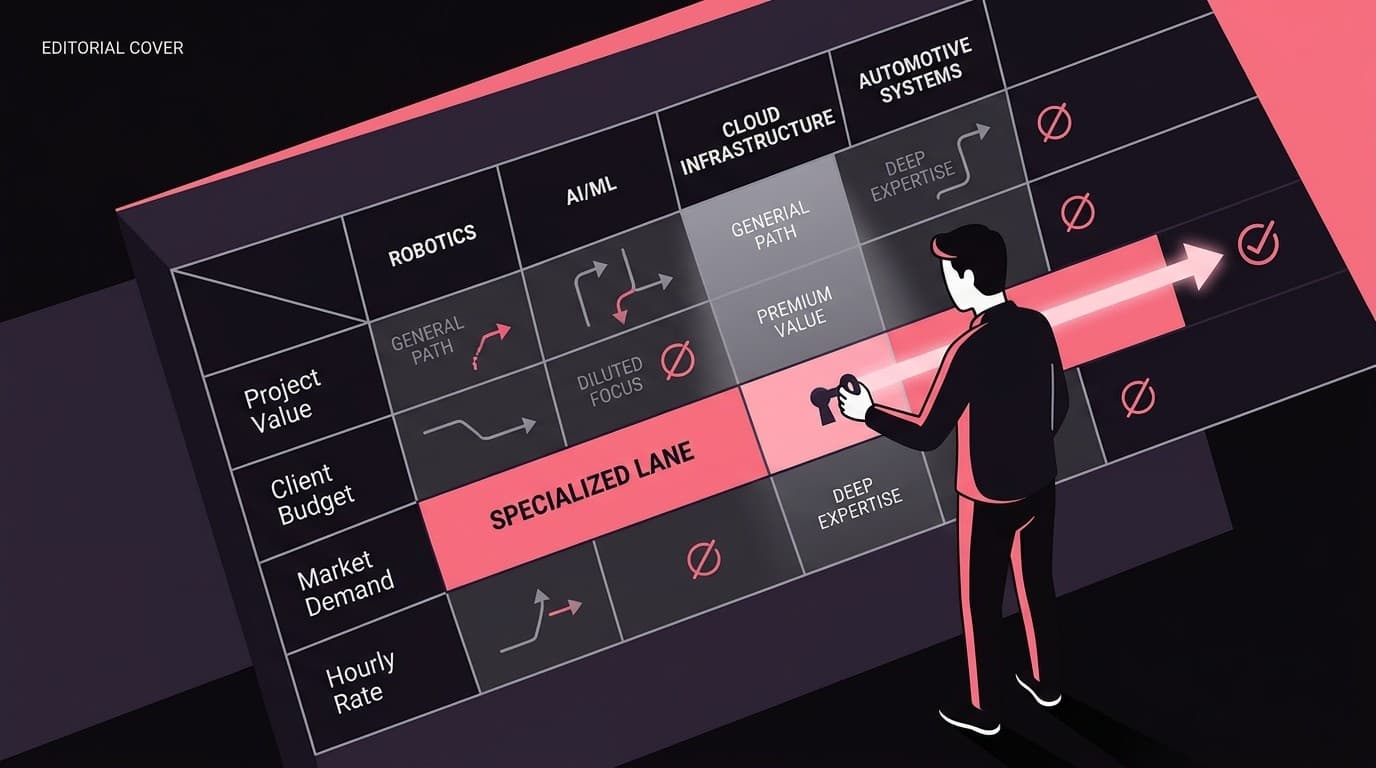
See also: Specializing Beats Generalizing: A Decision Table for... - the sharper your specialization, the harder you are to replace, which makes the retainer case easier to open.
And if a client pushes back on rate during the retainer negotiation: The "Can You Do It Cheaper" Message: A Receipt for... covers that exact exchange without burning the relationship.
What does your current handoff process look like - do you document the system before or after you realize you should have?
Frequently asked questions
Before final delivery, not after. Once the project is marked complete, the client's mental frame shifts to 'done.' Raise the ongoing value conversation during the last week of active work, when the system's complexity is still visible to both sides.
Avoid selling hours. Define scope by work type: one planned feature cycle, incident response within a stated window, monthly dependency review. Hours-based retainers invite the client to track utilization and cut when a month looks quiet.
Describe the handoff requirements honestly. A real handoff includes runbooks, architecture decision records, and pairing time. If the internal team has bandwidth for that, let them take it. If not, a retainer preserves context until they do.
Three things: what is included (feature work, incident response, reviews), what is not included (net-new discovery, out-of-scope migrations), and the escalation path. Written scope makes the retainer feel like a product with a clear boundary, not an open monthly tab.
Enjoyed this article?
Get notified when I publish new posts on SaaS, Laravel, and remote engineering.